
Complete Aircraft Paint Planning Guide for Owners in the Northeast
Aircraft paint is one of the most important long-term protection systems on any airplane. While many owners first think about airplane paint in terms of appearance, the real value goes far beyond a glossy finish. A properly applied paint system protects the airframe from corrosion, preserves resale value, and supports structural longevity.
This authority page explains airplane paint cost factors, repaint timelines, coating systems, weight considerations, and how to compare quotes. It is also designed to measure regional demand for potential aircraft paint capabilities. If you are considering repainting your airplane, this guide will help you plan the project intelligently.
Learn more about our aviation services on the main page .
Why Aircraft Paint Matters
Aircraft paint serves as a corrosion barrier between the environment and the aircraft structure. Aluminum airframes are especially vulnerable to moisture intrusion, de-icing chemicals, and environmental contaminants. Over time, small cracks or adhesion failures in paint can allow corrosion to begin beneath the surface.
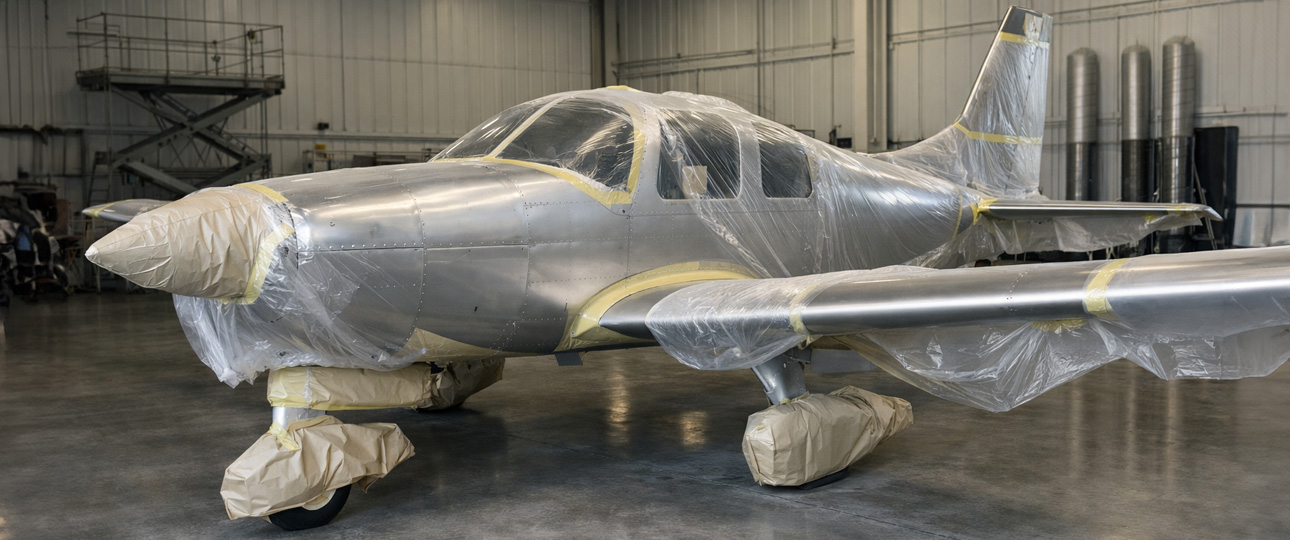
Repainting an aircraft is often combined with inspection and surface correction. During a strip and repaint process, technicians can identify corrosion areas, surface imperfections, or aging repairs that were hidden under older paint layers. This preventative approach aligns with corrosion awareness guidance from the Federal Aviation Administration .
Beyond protection, paint significantly influences buyer perception. A clean, modern exterior improves market appeal and often shortens time on market when selling.
Aircraft Paint Cost Factors
Aircraft paint cost varies widely depending on aircraft size, condition, and design complexity. Typical ranges in the United States include:
- Piston single engine aircraft: $15,000 – $25,000
- Twin engine piston aircraft: $25,000 – $45,000
- Turboprop aircraft: $45,000 – $95,000+
- Light business jets: $80,000 – $160,000+
The largest driver of the paint cost is labor. Surface preparation, stripping old coatings, corrosion treatment, masking, and precision spraying require significant skilled labor hours.
Additional cost variables include:
- Number of colors in the paint scheme
- Extent of disassembly required
- Condition of existing paint layers
- Environmental control requirements
Aircraft Paint Process Overview
A professional aircraft paint project follows a structured, quality-controlled workflow designed to maximize durability, adhesion, and long-term corrosion protection. While each facility may have minor variations, the core stages of aircraft paint preparation and application remain consistent across the industry.
- Initial inspection and documentation: A detailed visual and structural assessment of the airframe is performed. Existing coating condition, corrosion spots, surface defects, and prior repairs are documented before work begins.
- Disassembly and protection: Removable panels, fairings, antennas, and select control surfaces may be removed to ensure proper coverage. Sensitive components are masked and protected to prevent contamination.
- Removal of existing aircraft paint: Approved chemical or mechanical stripping methods are used depending on airframe material and existing coatings. This step exposes the bare substrate for inspection.
- Surface preparation and corrosion correction: Bare metal or composite surfaces are cleaned, sanded, treated, and conditioned as required. Any corrosion discovered during stripping is addressed before coating continues.
- Primer application: A compatible primer system is applied to promote adhesion and enhance corrosion resistance. Proper flash times and environmental control are critical during this phase.
- Base coat and color application: The primary aircraft paint colors are applied in controlled layers. Multi-color schemes require precise masking and layout accuracy to ensure sharp lines and symmetry.
- Clear coat and finishing: A protective clear coat may be applied to enhance gloss, UV resistance, and long-term durability. After curing, surfaces may be polished as appropriate.
- Reassembly and final inspection: Removed components are reinstalled, markings are verified, and a final quality inspection confirms surface integrity and finish consistency.
The majority of aircraft paint quality is determined during preparation rather than final spraying. Proper environmental control — including temperature, humidity, and dust management — directly impacts curing and long-term adhesion. Rushing preparation or reducing surface correction time often leads to premature paint failure.
Owners should also understand that unexpected findings can occur after stripping. Corrosion, filler from prior repairs, or hidden surface damage may require additional labor. A transparent communication process during these discovery stages is essential to maintain project control and avoid cost surprises.
Aircraft Paint Coatings and Design Choices
Modern aircraft paint systems commonly use polyurethane-based coatings due to durability, chemical resistance, and long-term UV stability. A complete aircraft paint system typically includes surface preparation, corrosion-resistant primer, compatible base coat layers, and in many cases, a protective clear coat for enhanced gloss and longevity.
The compatibility between primer and topcoat is critical. Using a properly engineered coating system ensures adhesion strength, flexibility, and resistance to environmental stress such as temperature changes and moisture exposure. Controlled application conditions — including humidity and temperature management — significantly influence final aircraft paint durability.
Owners should also evaluate finish types. High-gloss finishes enhance appearance and reflectivity, while satin or semi-gloss areas may be used strategically depending on the design concept. Multi-color schemes require precision masking and extended labor time but can dramatically modernize the aircraft’s visual presence.
Color choice is not purely aesthetic. Darker aircraft paint tones can absorb more heat, potentially affecting surface temperature during prolonged sun exposure. Lighter color bases may help maintain more consistent thermal behavior, especially for aircraft stored outdoors.
Long-term maintenance considerations should influence design decisions. Complex graphics and intricate striping can be visually striking, but simpler layouts often allow easier touch-up work after minor hangar rash or panel replacement. A balanced aircraft paint design considers durability, ease of repair, and overall lifecycle cost — not just immediate visual impact.
Planning Downtime for Aircraft Paint Projects
Typical aircraft paint downtime ranges from three to six weeks, depending on aircraft size, design complexity, and surface condition. Larger turboprop or jet aircraft, as well as multi-color paint schemes, may require additional time due to extended masking, curing, and inspection stages.
Aircraft owners should plan repaint scheduling strategically. If the aircraft supports business travel, seasonal tourism, or recurring operational commitments, aligning the aircraft paint project with lower-demand flying periods can significantly reduce disruption. Winter and early spring months are often preferred in northern climates.
It is important to understand that aircraft paint timelines are influenced by more than spray time alone. Surface preparation, stripping, corrosion correction, primer cure cycles, and environmental control all require proper sequencing. Rushing these steps to reduce downtime can compromise long-term coating performance.
Owners should also account for potential scope adjustments. Once old coatings are removed, previously hidden corrosion, surface filler, or minor structural repairs may be discovered. A well-managed aircraft paint project includes contingency time to address these findings without creating unrealistic delivery expectations.
Finally, ferry logistics should be considered when planning downtime. If the aircraft must be repositioned to a paint facility, weather conditions, crew availability, and insurance requirements may affect scheduling. Building buffer time into the overall aircraft paint timeline helps ensure a smoother project experience and reduces operational stress.
Aircraft Paint FAQ
FAQ TOC
- How long does aircraft paint last?
- Does aircraft paint affect weight?
- Is full strip better than repaint over existing paint?
- How long does aircraft paint last?
- Aircraft paint typically lasts between five and ten years, depending on storage conditions, UV exposure, and maintenance practices.
- Does aircraft paint affect weight?
- Paint adds weight, but a properly managed strip and repaint can prevent excessive buildup from multiple layers.
- Is full strip better than repaint over existing paint?
- In many cases, full stripping provides better long-term durability because it allows inspection and correction of hidden corrosion.